“Look at their pink noses, Sam. That one is colored like an Oreo. Look, that one has a star on his forehead. Sam, Sam, listen to the little sounds they make. We don’t deserve guinea pigs.”
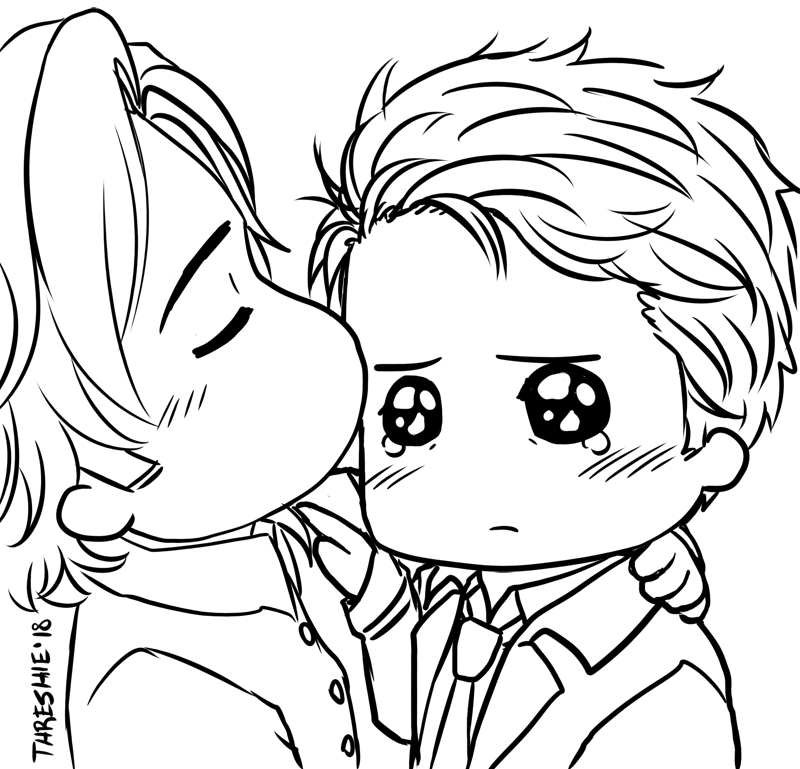
Sweet Sabriel with a forehead kiss and a corgi. This is a banner commission for the awesome @akhuna01 (who Tumblr will not let me tag, it seems) – thank you! ♥
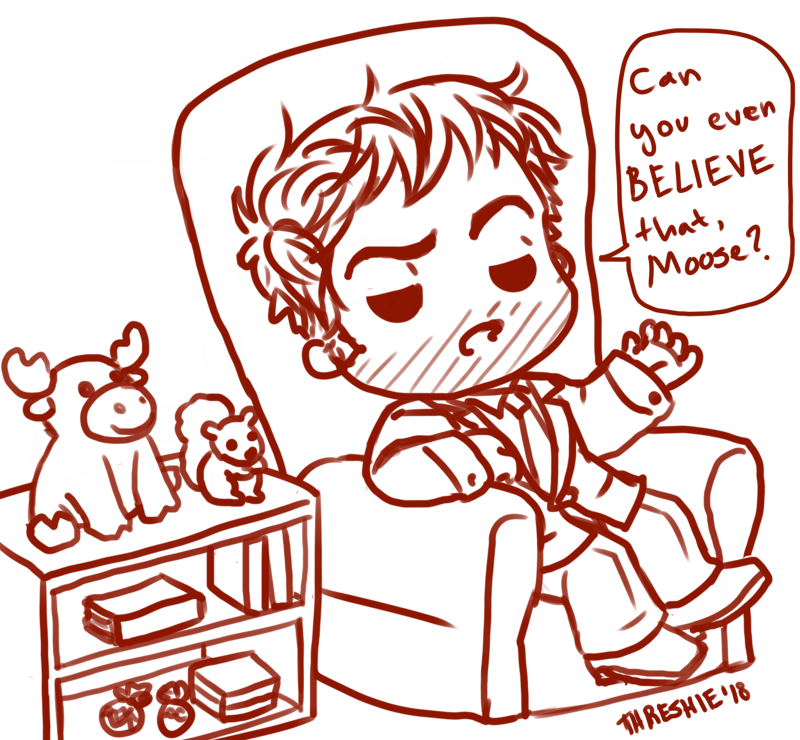
For today’s warm up, I drew out my mental image while reading this cute silly Crowley ficlet by @talkingtomyselfagain . I’m sure you’ll find a cute giraffe to be the Cas in your plushie Team Free Will soon, Crowley!
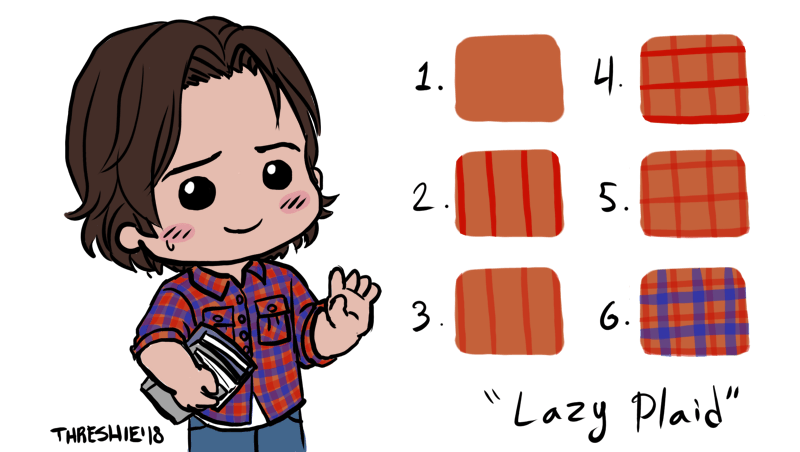
Here’s a mini tutorial on something that the Supernatural fan artist might find handy: how to whip up a nice plaid flannel pattern fast!
Drawing “Lazy Plaid” step by step:
1. Background color.
2. Make a NEW layer and pick your stripe color. Draw all lines going in one direction (vertical or horizontal.)
3. Change layer opacity to 50%.
4. Make another NEW layer, and draw all lines going the other way.
5. Change that layer’s opacity to 50%.
6. Repeat steps 2-5 with a second color, using the first stripes as a guide (always draw to the left of the other stripes on vertical layer, beneath other stripes on horizontal layer, for example. That’s what I did here.)
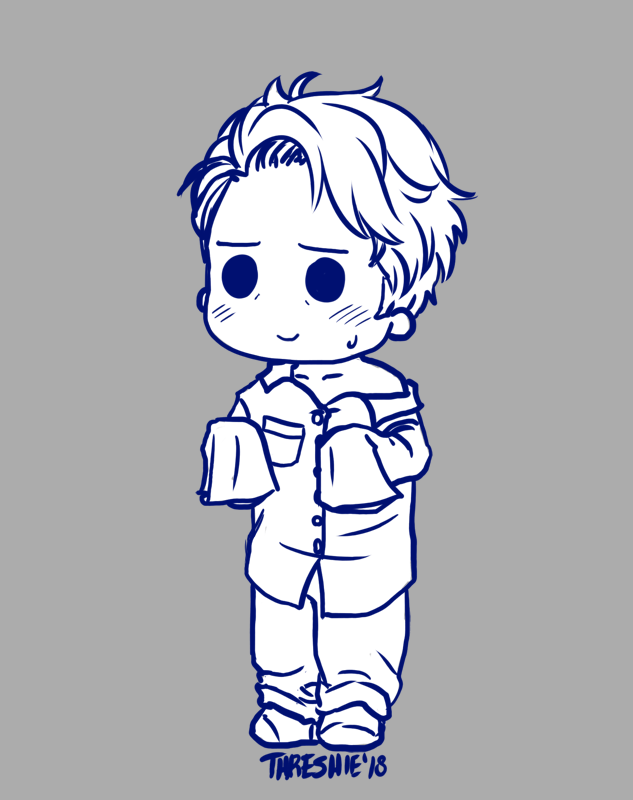
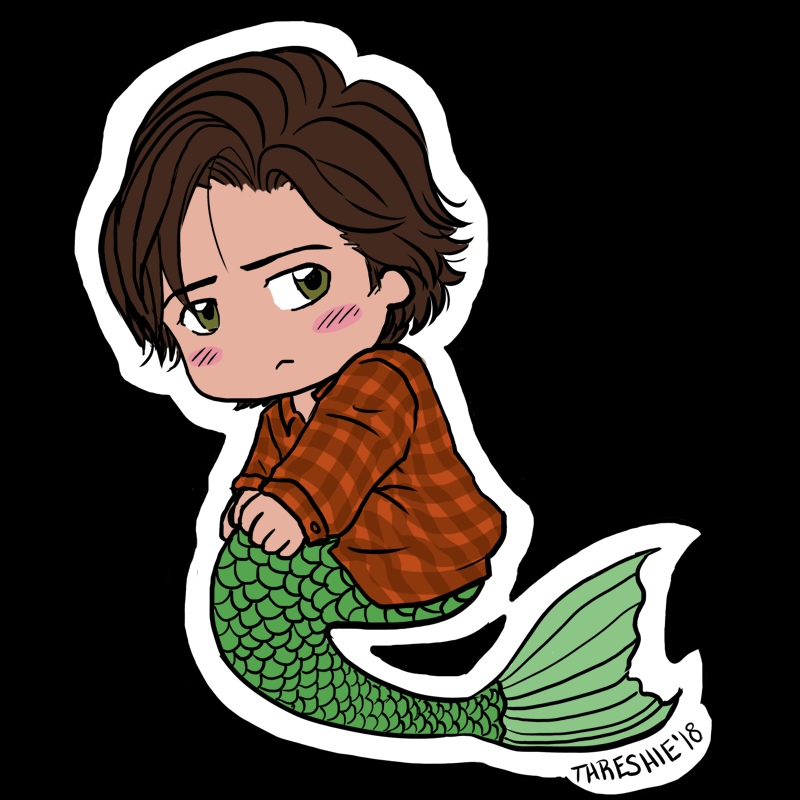
And that’s it! Chibi Sam is modeling the color I drew in the steps.
Tips and Suggestions:
Try to make the negative space between the lines near the criss-crossing parts turn out square.
You need to have the same size lines going each direction for it to look like plaid.
Play with colors! Flannel/plaid cannot be too bright and colorful, but it’s good to stick to 3-4 colors, tops. Remember that crossing colors will blend – Sam’s shirt has purple in it because I criss-crossed blue and red!
ALWAYS start a new layer for each stripe direction and color, or the reduced opacity will not make your cute lil plaid squares pattern where the lines criss-cross.
Tinker with opacity – I like somewhere between 50 and 75 percent.
Try making one color set of lines thick and the other thin.
Curving your plaid lines around shirt wrinkles and stuff sells it that the pattern is on the shirt and moving with it.
This can be used to make more of a basic checked pattern by drawing only one set of very thick lines.
I noticed the pockets of flannel shirts tend to have the pattern diagonal, which it’s not on the rest of the shirt. Good to know for realism!
Have fun, deck your hunter characters out in bright flannels, and by all means, link me if you use my tutorial. I wanna see your art! ♥
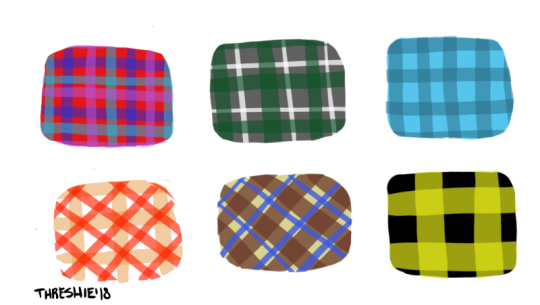
I’ll leave you with a few more plaid patterns to contemplate:



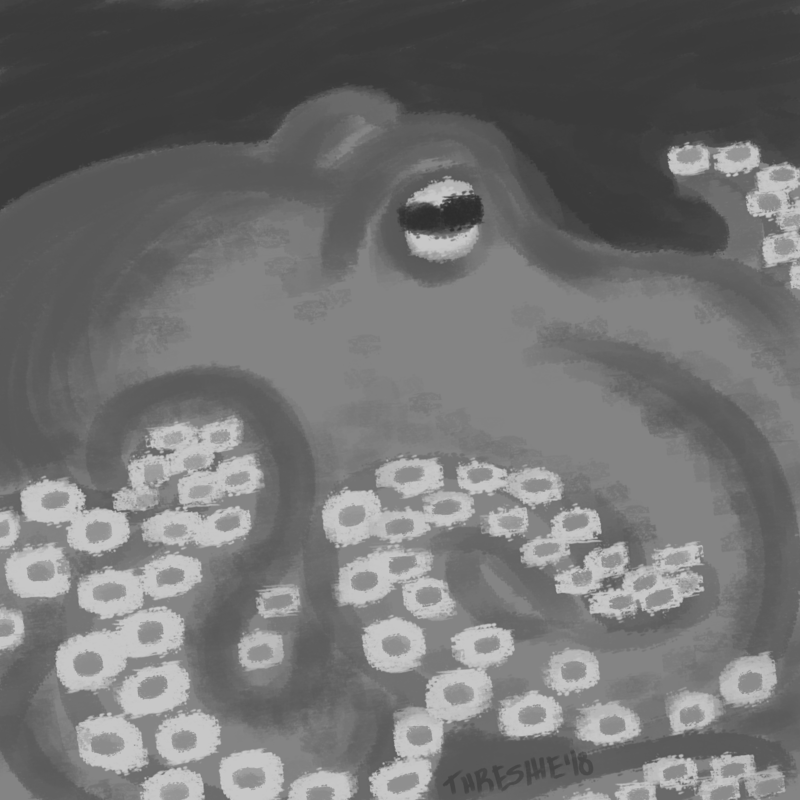
 Karate, SPN Demonic Octopus Guardian