I have a mute character in the story I’m writing and one of my beta readers suggested I use italics when they sign so that I don’t have to keep peppering “they signed” or “their hands flashed” throughout the piece.
But like…I always read italics in a different tone like they’re thoughts. It seems quieter than using normal quotations which makes what they say look less significant on the page than other character’s dialogue.
I really don’t think my audience needs me to use completely different punctuation around a mute character. There’s no need to act like they’re speaking a different language since their muteness isn’t a focal point in the story.
So really this reader’s comment has done the complete opposite of what they intended. Now I’m actively taking out as many of my “hands flashed” notations as possible and just writing in normal body language because, clearly, the other characters understand them and my audience doesn’t need to be coddled.
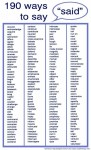
As an HOH reader and writer I can affirm that once the signing has been established it can just be treated like “said”.
You can add little things for emphasis though, like how fast or flippant a sign is given, also a lot of our “punctuation” is in facial expressions, so wild looks is kind of normal. Also messing up signs and just.. pushing them aside. Like, you mess up a fingerspell and just take both hands and shove the air in front of you to your side, people who sign eventually end up doing this for other things, like a “forget it” motion. It’s like a “wave it off” gesture.
Body language for someone who signs is a lot more animated than someone who speaks, as we use our upper body a lot in our conversations, so the act of “signing” is more than just hand signals.
Yes….yes GOOD this is the good stuff right here. I’m going to incorporate some of these ASAP ESPECIALLY the pushing the air but to clear it of your mistakes
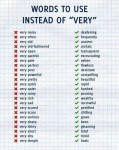
This masterlist is a masterlist of words that you may use alongside the word very, very being one of the most common words that are used when writing. I hope this helps you as much as it helps me in our writing seem more sophisticated and unique.
A:
Very accurate – exact Very afraid – fearful Very angry – furious Very annoying – exasperating
B:
Very bad – atrocious Very beautiful – exquisite Very big – immense Very boring – dull Very bright – luminous Very busy – swamped
C:
Very calm – serene Very careful – cautious Very cheap – stingy Very clean – spotless Very clear – obvious Very clever – intelligent Very cold – freezing Very colourful – vibrant Very competitive – cutthroat Very complete – comprehensive Very confused – perplexed Very conventional – conservative Very creative – innovative Very crowded – bustling Very cute – adorable
D:
Very dangerous – perilous Very dear – cherished Very deep – profound Very depressed – despondent Very detailed – meticulous Very different – disparate Very difficult – arduous Very dirty – filthy Very dry – arid Very dull – tedious
E:
Very eager – keen Very easy – effortless Very empty – desolate Very excited – thrilled Very exciting – exhilarating Very expensive – costly
F:
Very fancy – lavish Very fast – swift Very fat – obese Very friendly – amiable Very frightened – alarmed Very frightening – terrifying Very funny – hilarious
G:
Very glad – overjoyed Very good – excellent Very great – terrific
H:
Very happy – ecstatic Very hard – difficult Very hard-to-find – rare Very heavy – leaden Very high – soaring Very hot – sweltering Very huge – colossal Very hungry – ravenous Very hurt – battered
I:
Very important – crucial Very intelligent – brilliant Very interesting – captivating
J:
K:
L:
Very large – huge Very lazy – indolent Very little – tiny Very lively – vivacious Very long – extensive Very long-term – enduring Very loose – slack Very loud – thunderous Very loved – adored
M:
Very mean – cruel Very messy – slovenly
N:
Very neat – immaculate Very necessary – essential Very nervous – apprehensive Very nice – kind Very noisy – deafening
O:
Very often – frequently Very old – ancient Very old-fashioned – archaic Very open – transparent
P:
Very painful – excruciating Very pale – ashen Very perfect – flawless Very poor – destitute Very powerful – compelling Very pretty – beautiful
Q:
Very quick – rapid Very quiet – hushed
R:
Very rainy – pouring Very rich – wealthy
S:
Very sad – sorrowful Very scared – petrified Very scary – chilling Very serious – grave Very sharp – keen Very shiny – gleaming Very short – brief Very shy – timid Very simple – basic Very skinny – skeletal Very slow – sluggish Very small – petite Very smart – intelligent Very smelly – pungent Very smooth – sleek Very soft – downy Very sorry – apologetic Very special – exceptional Very strong – forceful Very stupid – idiotic Very sure – certain Very sweet – thoughtful
T:
Very talented – gifted Very tall – towering Very tasty – delicious Very thirsty – parched Very tight – constricting Very tiny –minuscule Very tired – exhausted
U:
Very ugly – hideous Very unhappy – miserable Very upset – distraught
V:
W:
Very warm – hot Very weak – frail Very well-to-do – wealthy Very wet – soaked Very wide – expansive Very willing – eager Very windy – blustery Very wise – sage Very worried – distressed
X:
Y:
Z:
A/N: If you know of anymore words I can add please message me.
This is very important 😉
see,, these are the lists that should get spread around a lot more than they do. you can say “said is dead” all you want but said is a viable word choice and not using it all the time could make your writing sound really wonky. but synonyms for things like “very ____”? the Good Shit.
I’ve finally built up a nice series of essays on writing asexuality and asexual characters in fiction. Here they are, all together in one place. They’re intended to be useful for asexual and non-asexual writers alike. They are also meant to be inclusive of gray-asexual and demisexual characters, although my knowledge is limited there.
These essays assume you already have a basic knowledge of what asexuality means: a general lack of sexual attraction to other people. This is not Asexuality 101; for that, check out the links on my resources page.
Sherlock Holmes as an Asexual Character – May be useful if you need an example or inspiration for how asexuality can influence a character and their relationships.
This post may be updated in the future as I write more stuff on this subject; I’ll link to it from my blog’s homepage so it’s easy to find.
Getting stabbed is an experience that no one in their right mind would want to have. But, what if you do get stabbed? What would that feel like?
It usually feels like you’re being punched.
The description of being punched really hard comes up a lot when people describe the experience. One woman said she didn’t even realize she was being stabbed, she just thought her attacker was punching her as hard as he could. Many people don’t feel the actual puncturing, just the force of the knife hitting them.
You might feel nothing at all.
This wasn’t as common as the feeling of being hit, but some people said they literally felt nothing. One person said they felt nothing, but their brain started racing and their fight or flight kicked in. Another didn’t realize someone stabbed them until they saw that they were bleeding profusely.
Occasionally, it feels like you got shocked.
A few stab wound survivors described it as a very quick, but powerful, electric shock. One person described it as static electricity, while another said it was like lightening hitting them. The pain of the initial shock goes away as quickly as it occurred.
Eventually, over time, it’s probably going to hurt.
Of course the location of the stab wound effects how much it would hurt. Getting stabbed in the arm isn’t going to hurt as badly as a stab that punctured a lung. But after a while, you will most likely feel some pain. If the person wiggles the knife while it’s still in you, the pain may be more intense.
Reblogging for future reference. Most Rychillan weapons are daggers or bows/crossbows.
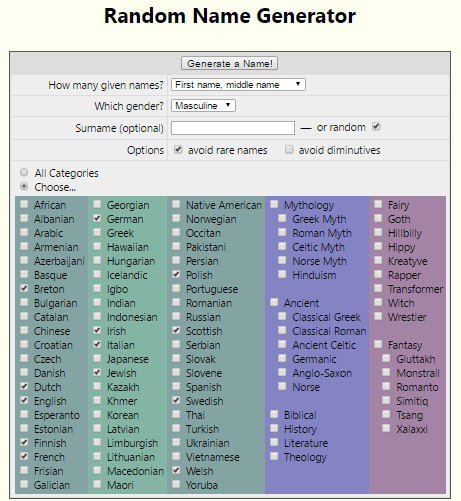
In case anybody was looking for a name generator, Behind the Name has one you can customize by everything from gender and nationality to whether you want your characters to sound like rappers, hippies, or hillbillies…
There’s also a page for surnames, should you ever need that. If you’re stuck on names, I really recommend these pages.
Embarrass your protagonist. Make them seem weak and vulnerable in some way.
Shoot someone. That always takes the reader by surprise.
In relation, kidnap someone. Or, rather, make it seem to your protagonist like someone has been kidnapped.
Have one of your side characters disappear or become unavailable for some reason. This will frustrate your protagonist.
Have someone kiss the wrong girl, boy, or person, especially if you’ve been setting up a romance angle. It’s annoying.
If this story involves parents, have them argue. Push the threat of divorce, even if you know it won’t ever happen. It’ll make your readers nervous.
Have someone frame your protagonist for a crime they didn’t commit. This could range from a dispute to a minor crime to a full-blown felony.
If this is a fantasy story involving magic or witchcraft, create a terrible accident that’s a direct result of their spell-casting.
Injure your protagonist in some way, or push them into a treacherous scenario where they might not make it out alive.
Have two side characters who are both close to the protagonist get into a literal fist-fight. This creates tension for the reader, especially if these characters are well-developed, because they won’t know who to root for.
Make your protagonist get lost somewhere (at night in the middle of town, in the woods, in someone else’s house, etc.)
Involve a murder. It can be as in-depth and as important as you want it to be.
Introduce a new character that seems to prey on your protagonist’s flaws and bring them out to light.
If it’s in-character, have one of your characters get drunk or take drugs. Show the fallout of that decision through your protagonist.
Spread a rumor about your protagonist.
If your protagonist is in high-school, create drama in the school atmosphere. A death of a student, even if your protagonist didn’t know them personally, changes the vibe.
If your story involves children, have one of them do something dangerous (touch a hot stove, run out into the road, etc.) and show how the protagonist responds to this, even if the child isn’t related to them.
In a fantasy story, toss out the idea of a rebellion or war between clans or villages (or whatever units you are working with).
Add a scenario where your protagonist has to make a choice. We all have watched movies where we have screamed don’t go in there! at the top of our lungs at the main character. Make them go in there.
Have your protagonist find something, even if they don’t understand the importance of it yet. A key, a document, an old stuffed animal, etc.
Have your protagonist get involved in some sort of verbal altercation with someone else, even if they weren’t the one who started it.
Let your protagonist get sick. No, but really, this happens in real life all the time and it’s rarely ever talked about in literature, unless it’s at its extremes. It could range from a common cold to pneumonia. Maybe they end up in the hospital because of it. Maybe they are unable to do that one thing (whatever that may be) because of it.
Have someone unexpected knock on your protagonist’s door.
Introduce a character that takes immediate interest in your protagonist’s past, which might trigger a flashback.
Have your protagonist try to hide something from someone else and fail.
Formulate some sort of argument or dispute between your protagonist and their love interest to push them apart.
Have your protagonist lose something of great value in their house and show their struggle to find it. This will frustrate the reader just as much as the protagonist.
Create a situation where your protagonist needs to sneak out in the middle of the night for some reason.
Prevent your character from getting home or to an important destination in some way (a car accident, a bad storm, flat tire, running out of gas, etc.)
“This is your daily, friendly reminder to use commas instead of periods during the dialogue of your story,” she said with a smile.
“Unless you are following the dialogue with an action and not a dialogue tag.” He took a deep breath and sat back down after making the clarifying statement.
“However,” she added, shifting in her seat, “it’s appropriate to use a comma if there’s action in the middle of a sentence.”
“True.” She glanced at the others. “You can also end with a period if you include an action between two separate statements.”
Things I didn’t know
“And–” she waved a pen as though to underline her statement–“if you’re interrupting a sentence with an action, you need to type two hyphens to make an en-dash.”
You guys have no idea how many students in my advanced fiction workshop didn’t know any of this when writing their stories.
Reblog to save a life
I love how easy it can be to learn stuff like this through tumblr and not through school.




 Karate, SPN Demonic Octopus Guardian